
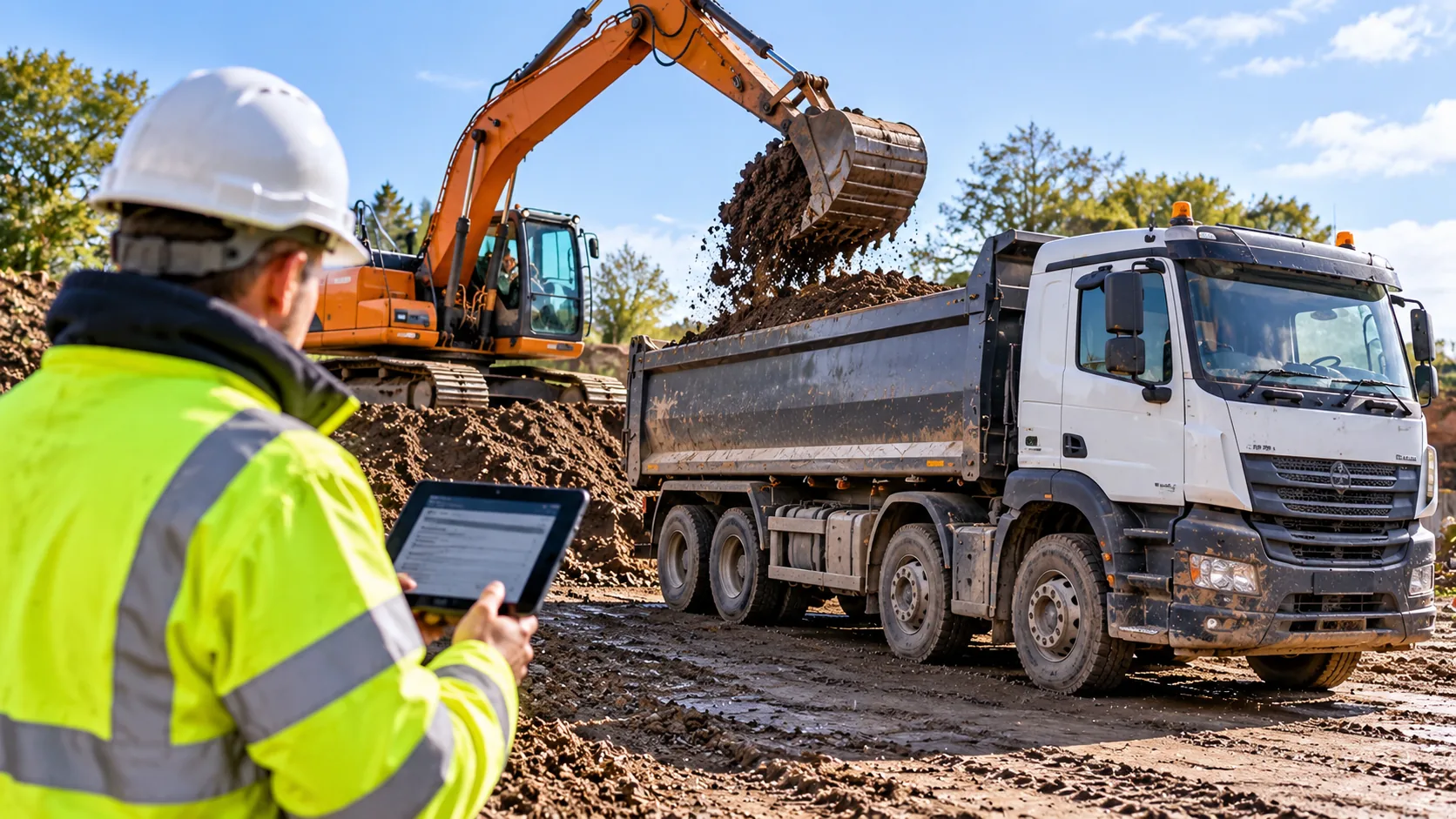
Waste Transfer Notes and Digital Waste Tracking: What Changes in October 2026?
In short: Waste transfer notes do not disappear on 1 October 2026. Current GOV.UK guidance says the existing paper-based method initially continues alongside the new Report receipt of waste service. Receiving sites in England and Wales must report applicable controlled-waste receipts digitally from 1 October 2026, while waste transfer notes, Annex VII forms and hazardous-waste consignment notes continue where required until official guidance changes.
Running tipper or muck-away jobs and still chasing paper dockets? See it on your jobs to discuss digital load records for your drivers and office. This is an enquiry link, not a statutory waste reporting service.
For tipper and muck-away operators: The first mandatory reporting phase concerns applicable receipts at permitted or licensed waste sites in England and Wales. The carrier still needs to meet its existing waste duty-of-care responsibilities and provide accurate load information to the receiving site. The government's published timetable places mandatory use by waste collectors in October 2027; check the current official rollout timetable before relying on that date.
Waste transfer note requirements: what must be recorded?
For transfers of non-hazardous controlled waste, a waste transfer note (WTN), or another document containing the legally required information, records the transfer between holders. The details must accurately describe the waste, including its classification, quantity, how it is contained, where and when it changes hands, and the parties involved. The applicable duty-of-care declarations and signatures are also important. Check the official waste transfer note form and duty-of-care code for the complete requirements.
Can a waste transfer note be electronic?
Yes. The required waste information can be kept electronically where the record meets the relevant duty-of-care requirements, including the necessary agreement or signatures. An ordinary digital delivery docket is not automatically a legally valid electronic waste transfer note. The UK Government also describes the electronic record and retention requirements.
How long must waste transfer notes be kept?
For non-hazardous waste transfer notes, both sides must generally retain a paper or electronic copy for two years and produce it when an authorised officer asks. Other waste classes and certain permitted activities have different rules.
Does every load need a separate note?
Normally each load needs a waste transfer note or equivalent required document. A season ticket may cover repeated non-hazardous waste transfers for up to one year where the relevant parties and waste type remain the same, with a separate schedule detailing each transfer. Check the GOV.UK season-ticket conditions before using one.
Who is responsible for the paperwork?
The people or businesses transferring and receiving waste each have responsibilities for the relevant waste transfer documentation. The receiving site's new digital reporting responsibility is separate from the existing waste duty-of-care documentation.
What might a waste facility ask the tipper driver for?
Before a load arrives, confirm the facility's requirements for waste description and classification, origin, carrier and vehicle, quantities and supporting paperwork. The facility may also have its own acceptance and weighbridge processes; these are not automatically the same as statutory submission fields. See our practical facility requirements guide for the driver and office checklist.
Are waste transfer notes being replaced by digital waste tracking?
Not immediately. The Government's rollout is phased. Reporting of applicable waste receipts is already mandatory for permitted or licensed receiving sites in England and Wales from 1 October 2026, with Northern Ireland and Scotland due from 1 January 2027. The currently published timetable places mandatory service use for waste collectors in October 2027. Continue using required existing documents until official changes apply to your circumstances. Check the current government timetable.
Can Tipper360 submit statutory digital waste records to Defra?
Tipper360 helps drivers and the office organise construction jobs, loads and supporting operational evidence. Do not assume that using Tipper360 submits records to the government service, generates a legally compliant waste transfer note or establishes an approved Defra API integration. Check the particular regulatory obligation and submission method separately.
What actually becomes mandatory on 1 October 2026?
Permitted or licensed organisations receiving controlled waste in England and Wales must enter details of applicable loads they receive into the Report receipt of waste service. Current guidance requires records within two working days, starting on the day after the waste is received.
What does this mean for a tipper carrier?
A carrier may not yet be the party making the Phase 1 digital submission, but the receiving site needs accurate information about the incoming load. Consistent job, material, origin, destination, carrier and vehicle information therefore matters at the point of movement.
For excavated soil and muck-away work, see digital load records for muck-away; for demolition and mixed construction material, see C&D waste jobs and dockets.
What should the office do now?
Ask the receiving site exactly which load details and format it needs. Keep using the statutory waste paperwork that applies to your loads. Check that the driver can record the relevant job and load information and that the office can find it quickly when the facility asks.
Where Tipper360 fits
Tipper360 keeps the construction movement and its operational evidence together. It is not the Government service and does not replace legal documents simply by being used. Its role is to make the underlying job and load record easier for drivers and the office to create and retrieve.
For tipper businesses managing repeat loads, drivers and subcontractors, see how Tipper360 runs muck-away jobs and digital load records. If a receiving facility is asking for electronic load details, read digital dockets for UK tipper operators to see the practical driver-to-office workflow. These operational records are distinct from a statutory waste transfer note.
Official source
UK Government — Digital waste tracking: check if you need to report the waste you receive
Regulatory guidance reviewed 2 November 2026. Requirements can change.
For the day-to-day driver and office workflow, see digital dockets for UK tipper trucks. This is operational recordkeeping, not a replacement for statutory waste documents or government reporting.
Read the main UK Digital Waste Tracking guide
Electronic waste transfer note vs digital delivery docket
These records may contain overlapping details, but they serve different purposes. An electronic waste transfer note is the statutory transfer record for a qualifying waste movement and must contain the legally required information and satisfy the applicable duty-of-care rules. A digital delivery docket is an operational record of the job or load, which may include times, photographs, signatures and delivery evidence. A weighbridge ticket records weighing information and is not automatically a substitute for either document.
Before replacing paper paperwork, check what your waste classification and transfer require, what the receiving site will accept, and whether your particular software workflow produces the required legal record. For a load-by-load operational comparison, read digital docket vs ePOD vs weighbridge ticket.
For operators deciding how to organise the work as well as the paperwork, compare the practical requirements in our UK muck-away software buying guide. For the reporting timetable affecting carriers, see when Digital Waste Tracking becomes mandatory for waste carriers. These are separate questions from whether a particular movement requires a statutory waste transfer note.