
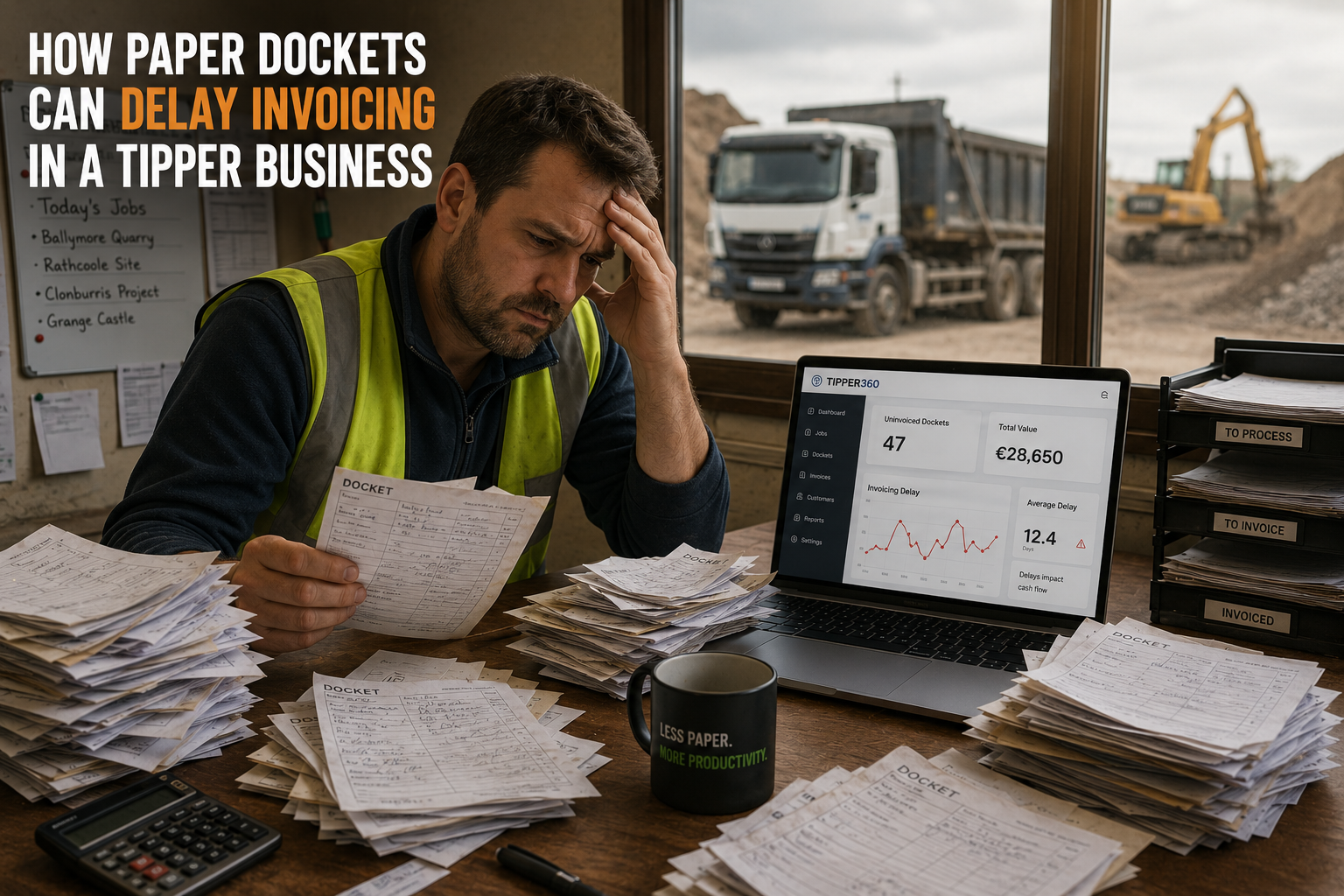
How Paper Dockets Can Delay Invoicing in a Tipper Business
Waiting for paper dockets can hold up invoicing and customer queries. See how digital delivery records help a tipper business keep paperwork moving.
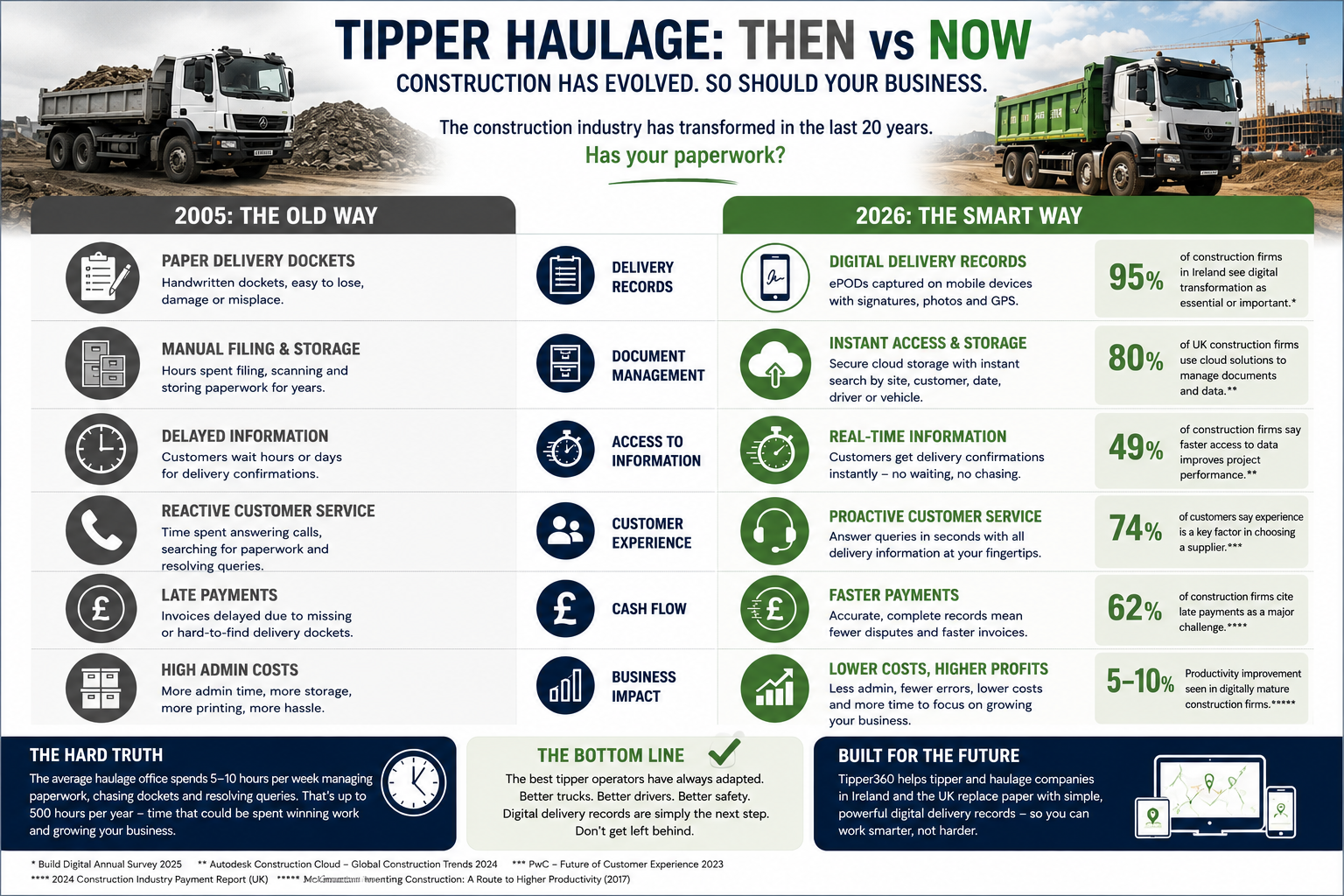
Construction Has Changed. Why Are So Many Tipper Companies Still Working Like It's 2005?
Construction is changing fast across Ireland and the UK. Discover why more tipper and haulage companies are replacing paper delivery dockets with digital records to improve customer service, reduce admin and prepare for the future.
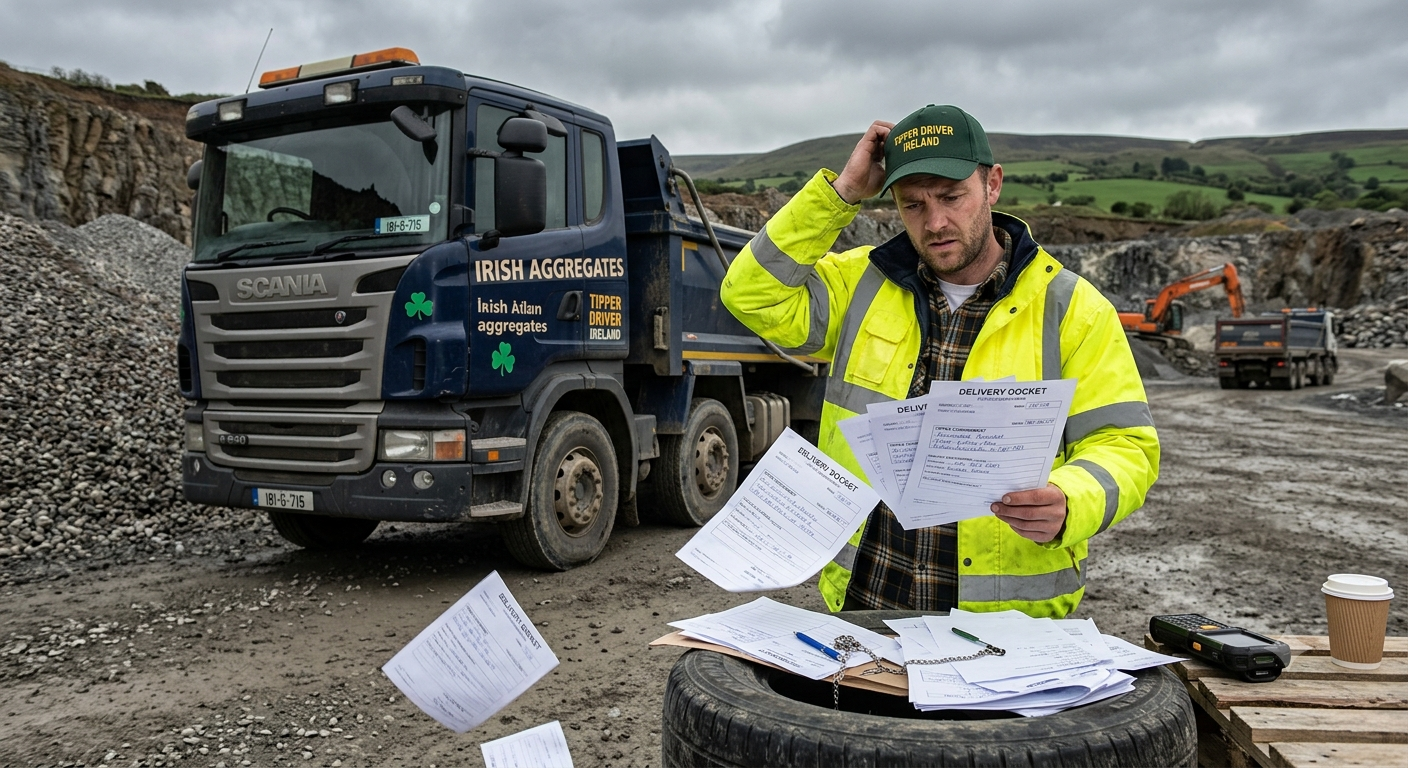
Has Anybody Seen That Delivery Docket? | Why Delivery Dockets Go Missing
Every haulage office has asked, "Has anybody seen that delivery docket?" Discover why paper delivery dockets go missing and how digital delivery dockets help tipper operators save time, reduce paperwork and get paid faster.

Why Isn't My Customer Paying Me?7 Reasons Tipper Companies Wait Longer to Get Paid (That Have Nothing to Do With Payment Terms)
Learn why tipper companies experience payment delays and how replacing paper delivery dockets with digital delivery dockets can improve cashflow, reduce paperwork and speed up customer payments.
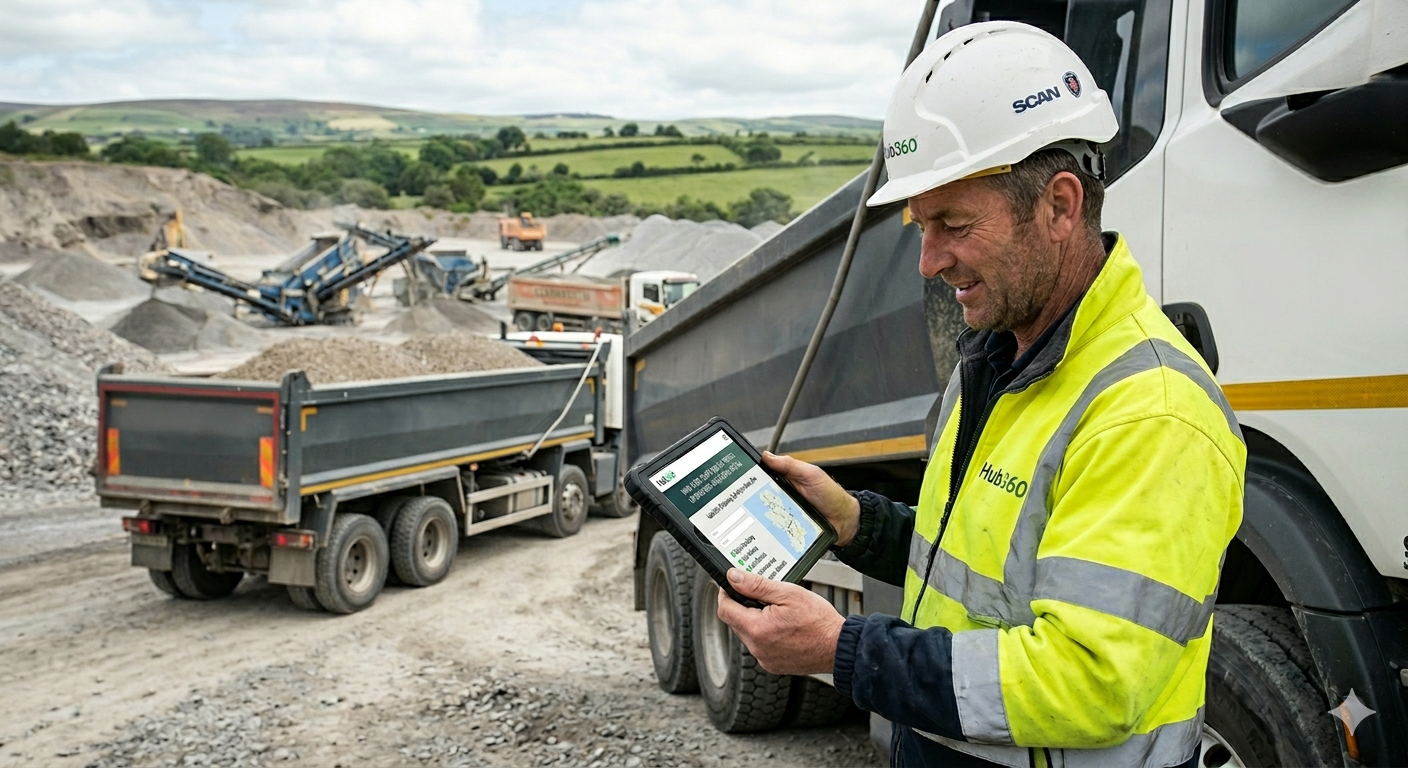
Why Irish Aggregate Suppliers and Tipper Operators Are Going Digital
If you run tipper trucks, deliver stone or sand, move spoil, or manage subcontractors, you'll know that paperwork has a habit of taking over your day.
A simple delivery can involve dockets, phone calls, driver queries, photos, signatures, and trying to work out where loads actually are. Then there's chasing paperwork for invoices and answering customer questions days or even weeks later.
The reality is that most aggregate suppliers and tipper operators didn't get into this business to sit behind a desk.
They got into it to move loads.
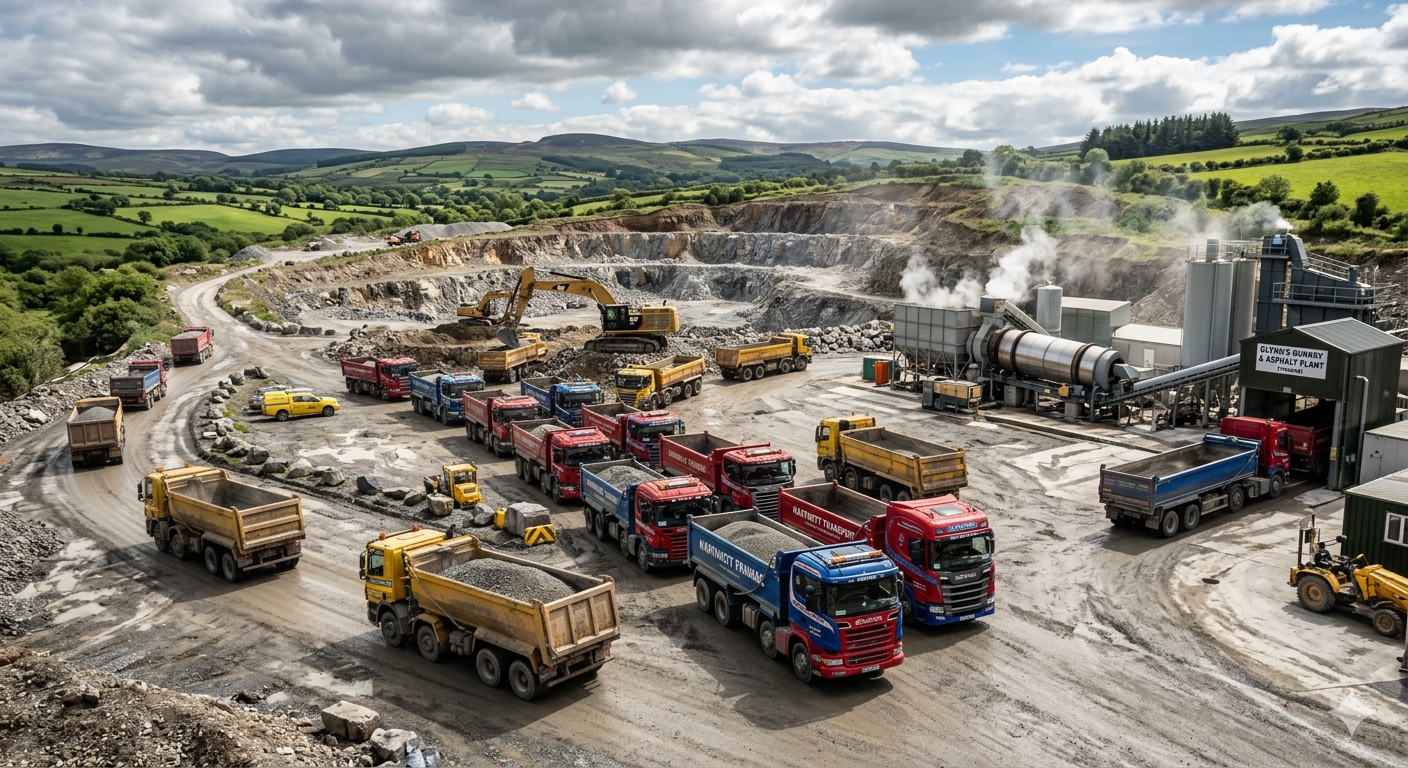
The 7 Things the Most Profitable Tipper Operators Do Differently
What separates the most profitable tipper operators from the rest? We look at the habits, systems and decisions that help successful haulage businesses win more work, get paid faster and grow sustainably.

The Weighbridge Reconciliation Nightmare: Why Your Paper Dockets are Costing You 15+ Admin Hours Every Week
By removing the friction of paper, companies using Tipper360 report an average 75% reduction in admin time. More importantly, the "invoicing gap" drops from 7–10 days down to 24 hours. In 2026, cash flow is king—and digital tracking is the key to the castle.
The October 2026 Mandatory Digital Waste Tracking Deadline: Is Your Tipper Fleet "Turn-Away" Proof?
The Department for Environment, Food & Rural Affairs (DEFRA) and the Environment Agency (EA) are introducing the Mandatory Digital Waste Tracking Service (DWTS) to replace the outdated system of paper Waste Transfer Notes (WTNs) and Hazardous Waste Consignment Notes (HWCNs). The goal is to eliminate an estimated £1 billion annual cost of waste crime in the UK.
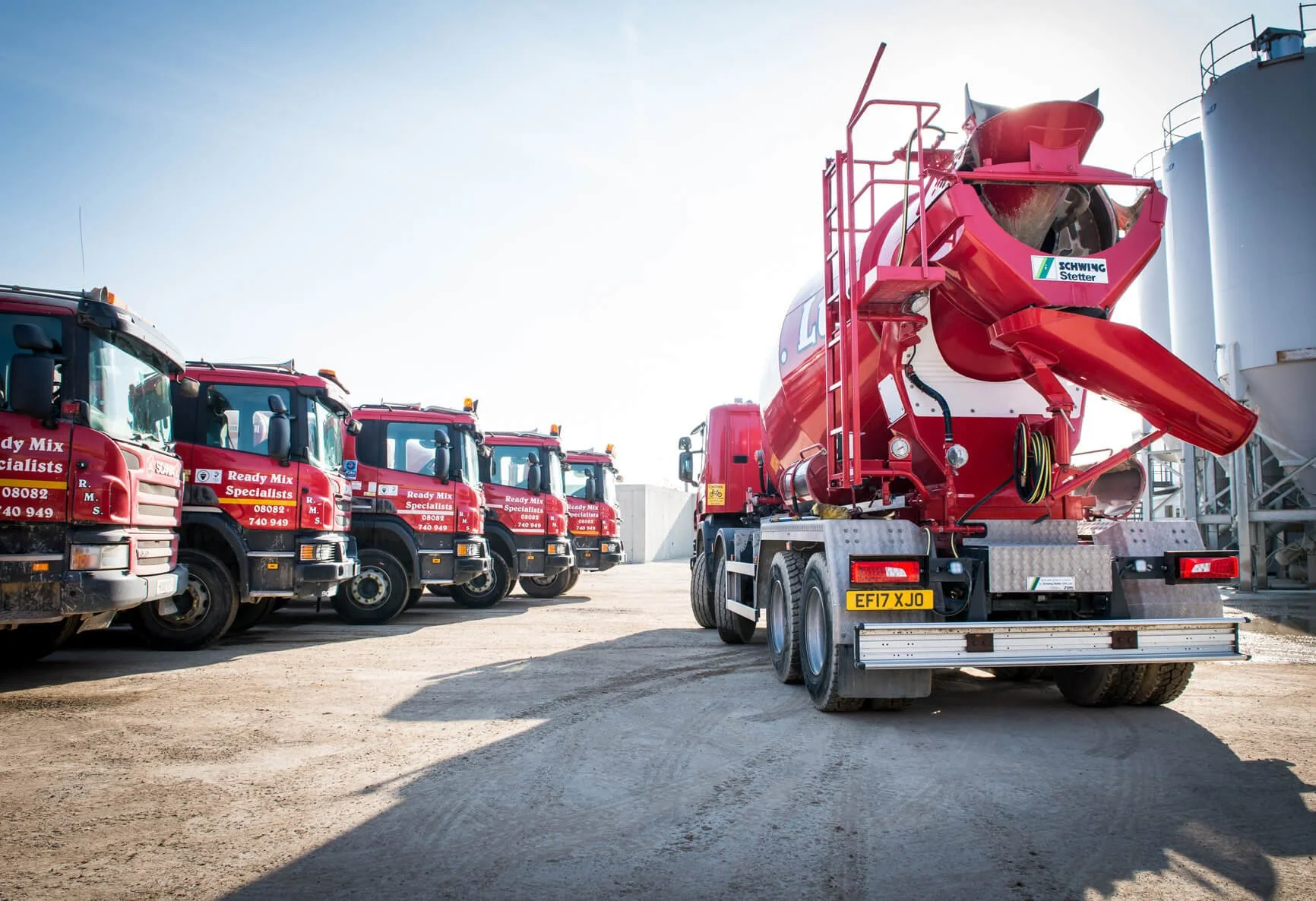
Concrete Delivery Tracking for Ready-Mix Fleets: Stop Losing Loads and Margin
Running a ready-mix concrete fleet is a balancing act. You are trying to keep trucks moving, keep plants, drivers and sites happy, and still make money on every load. When there is a delay or a rejected load, the first finger often points at the truck – even when the problem wasn’t yours.
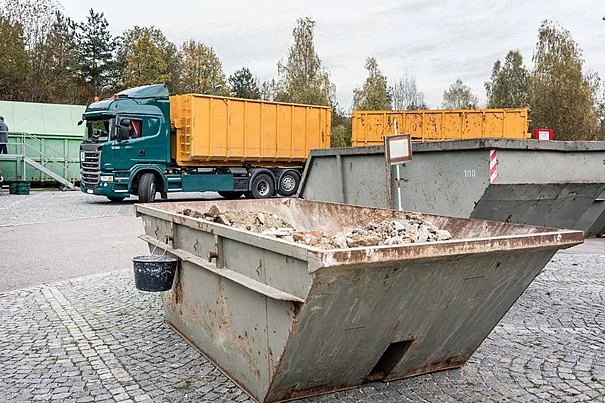
The Hidden Costs of Paper Waste Dockets for Tipper Fleets
Discover the hidden financial costs of using paper waste dockets in your tipper fleet. Learn how Tipper360 improves cash flow and eliminates lost tickets.
If you run a bulk haulage business or a tipper fleet, you know that profit margins are often tight. Fuel costs, vehicle maintenance, and driver wages dominate the balance sheet. Yet, one of the biggest hidden drains on profitability is sitting right on the dashboard of every truck in your fleet: the paper docket book.
While carbon-copy waste transfer notes have been the industry standard for decades, they are silently costing your business thousands of pounds a year in delayed cash flow, administrative overhead, and lost revenue.