
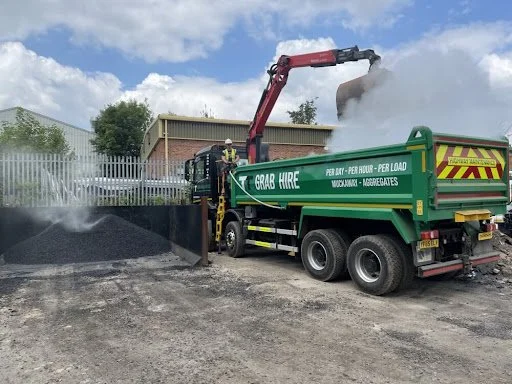
Grow Digital Grant for Aggregate Hauliers in Ireland: Stop Losing Time to Paper Dockets
Most aggregate haulage businesses do not lose money on one load.
They lose it in tiny amounts, repeated thousands of times.
A missing docket here. Ten minutes chasing a signature there. A customer asking for six weeks of delivery records on a Friday afternoon. Drivers sending photos into WhatsApp groups because paperwork is missing again.
Individually, none of these problems seem major. Across an entire year, they become a serious operational cost.
That is one reason why haulage and construction logistics businesses are steadily moving toward digital workflows. The Irish construction sector itself is already going through a wider digital shift, with industry surveys showing strong growth in the adoption of digital systems across operations and project management.
For aggregate operators, the pressure is practical rather than fashionable:
invoices need to go out faster
customers expect proof immediately
admin teams are stretched
margins are tight
paper creates delays
The Grow Digital Grant was designed to help smaller Irish businesses address exactly these types of inefficiencies.
The scheme, operated through the Local Enterprise Office network, covers 50% of eligible digital project costs up to €5,000. It is available to qualifying Irish businesses with up to 50 employees that complete a Digital for Business assessment.
Importantly for haulage operators, the official eligible categories include:
job-tracking software
workflow management systems
field service management
industry-specific cloud SaaS
electronic invoicing tools
That makes digital docket and delivery-tracking systems highly relevant to aggregate fleets.
A platform like Tipper360 replaces handwritten dockets and disconnected message chains with a single searchable workflow. Drivers record loads through an app, and the office receives delivery information immediately instead of waiting for paperwork to come back from trucks days later.
That changes several operational bottlenecks at once.
Take a common example.
A quarry customer asks for a summary of all loads delivered to a site over the previous month. In a paper-based office, somebody now has to:
gather dockets
check spreadsheets
confirm dates
match vehicle registrations
verify quantities
assemble a report manually
That process can easily consume a large part of an afternoon.
With a digital workflow, the report already exists in structured form.
The same applies to disputed deliveries. Instead of searching filing cabinets or ringing drivers, the office can search by:
customer
site
date
truck
driver
job reference
and retrieve the full delivery history quickly.
The Tipper360 savings calculator helps quantify how much time these manual processes are costing. Its figures are based on operational assumptions and construction administration benchmarks, including:
average admin time per paper docket
document retrieval time
manual reporting effort
dispute-handling workload
Actual figures vary between operators, but businesses are often surprised by how many staff hours disappear into paper handling over the course of a year.
For example, even a relatively small aggregate fleet completing 75 loads per day can generate thousands of dockets annually. Small admin delays repeated across that volume quickly become significant labour costs.
Digital systems also help cash flow.
One of the most common operational issues in haulage is that invoicing slows down because paperwork is incomplete or delayed. If dockets come back late, invoices go out late. If invoices go out late, payments arrive late.
Digital capture reduces that lag because delivery information is already in the system as the work happens.
The Grow Digital Grant exists specifically to support these types of operational improvements. Under the published guidelines, eligible costs can include software subscriptions, onboarding, setup and training for approved digital systems.
For aggregate hauliers, the process usually looks like this:
Complete the Digital for Business assessment.
Identify the current admin bottlenecks.
Estimate annual paper and reporting costs.
Apply through the Local Enterprise Office.
Implement the digital workflow.
The shift away from paper in construction logistics is already underway. The operators who move earlier are likely to spend less time on repetitive admin and more time running trucks, servicing customers and improving margins.